
What Are The Best Places to Retire in Texas?
Find the best places to retire in Texas, from safe DFW suburbs to Hill Country towns and budget-friendly cities, with real costs and trade-offs.

Ruby M. · Senior Living Writer
· 10 min read
Table of Contents
- What Makes Texas a Top State for Retirees?
- What Are The Best Places to Retire in Texas for Safety and Affordability?
- Wichita Falls: The Most Affordable Option
- Carrollton: The Safest Choice
- Plano and Garland: Livability and Value
- What Are The Best Places to Retire in Texas for Healthcare Access?
- What Are The Best Places to Retire in Texas for Lifestyle and Scenery?
- Hill County Towns
- Coastal Communities
- What Are The Best Places to Retire in Texas on a Budget?
- What to Consider Before You Choose
- Frequently Asked Questions
- Which Texas City is Right for You?
When looking for the best places to retire in Texas, the first question you might ask is one that turns out to be larger than it needs to be: Where will Mom and Dad be, or, will they really be happy? You could be an adult child who is helping a parent move to a safer location. Alternatively, you might be retiring and looking for a place that fits your budget without compromising your quality of life.
Texas is rightly featured in national lists of top retirement destinations. The state has no income tax, the cost of living is below the national average in most of its cities, and the scenery includes wineries in the Hill Country, beaches on the Gulf Coast, and peaceful desert towns. However, since Texas is a very large state, the best city for you will depend completely on what is most important to you, whether it's safety, healthcare, affordability, or lifestyle.
The guide examines the best places to retire in Texas by looking at what each city does well and also includes the honest compromises, such as summer heat, high property taxes, and gaps in healthcare, that most other lists ignore.
Tip
Key Takeaways:
1. There's no single "best" city, the right answer depends on whether you prioritize affordability, safety, healthcare, or lifestyle.
2. Property taxes (1.8–2%) and summer heat are real trade-offs to factor into any decision, no matter which city you choose.
What Makes Texas a Top State for Retirees?
It helps to understand why Texas consistently ranks so highly for retirement, since several statewide factors apply regardless of the city you pick.
Because Texas does not have a state income tax, Social Security, pensions, and 401(k) withdrawals are not subject to state taxation. The general cost of living is about 6 to 9 percent lower than the national average, which means retirement savings can last longer than in many other Sun Belt states.
The result is higher property taxes. In Texas, the rate is about 1.8 to 2 percent, which is well above the national average. For a house costing $300,000, the annual amount works out at roughly $5,400 to $6,000, a fixed expense that should be included in any retirement budget before one becomes attached to a particular house.
If you're short on time, here's a quick summary. Details for each city are below.
Category | Best City | Why It Stands Out |
Overall / Affordability | Wichita Falls | Lowest cost-burdened senior households in Texas |
Safety | Carrollton | Among the lowest violent and property crime rates in the state |
Healthcare Access | Pasadena | Nearly 50 times the statewide ratio of primary care physicians per senior |
Livability / Walkability | Plano | High walkability, strong park access, large senior population |
Hill County Lifestyle | Fredericksburg | Wineries, walkable Main Street, milder climate |
Coastal Living | Corpus Christi | Gulf Coast access at a fraction of Florida coastal prices |
Tightest Budget | EL Paso | Among the cheapest median home prices in the state |
What Are The Best Places to Retire in Texas for Safety and Affordability?
If you place safety and a lower cost of living at the top of your list, then the suburbs of Dallas-Fort Worth deserve to be given serious consideration. A 2026 study by RetirementLiving.com ranked 31 Texas cities by affordability, safety, livability, and access to healthcare, and seven of the top ten spots were taken by suburbs in the DFW area.
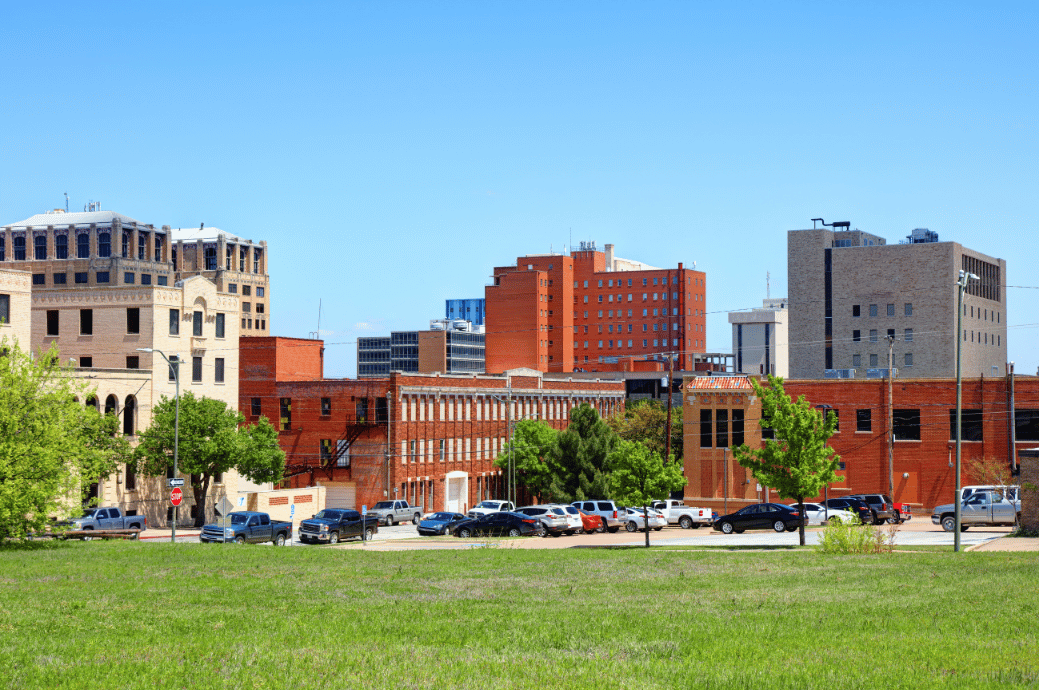
A vibrant neighborhood in Wichita Falls, Texas
It's no coincidence; these cities offer the safety of small towns along with the advantages of a nearby major metro, which is exactly what many retirees and their families are looking for.
Wichita Falls: The Most Affordable Option
Wichita Falls came out as number one in the 2026 study mainly because of its affordability; it has the smallest proportion of cost-burdened senior households in the state, at 16.3% compared to the state average of 19%.
The median rent is around $1,185, more than $500 less than the Texas median of $1,728. For retirees on a fixed income, this difference is important. The city also features the Hotter’N Hell Hundred, a major cycling event that takes place each year if you're looking to stay active.
Carrollton: The Safest Choice
Carrollton, about 20 miles north of Dallas, ranked No. 2 overall and was particularly noted for its safety, with some of the lowest per-capita rates of property and violent crime in Texas.
Seventeen percent of people in Carrollton are 65 or older, which is higher than the state average of 14 percent. The senior center provides free fitness classes, creative arts programs, and social events that help people build a new community after moving there.
Plano and Garland: Livability and Value
Plano came out on top in the livability rankings because of its excellent walkability and easy access to green spaces. About 43% of residents live within a ten-minute walk of a park, higher than the state average of 32%. The Arbor Hills Nature Preserve and Oak Point Park are popular attractions for retirees who wish to remain active outdoors.
Garland, located just northeast of Dallas, is notable for its affordability, as its rates of cost-burdened senior households, median rent, and senior poverty are all lower than the state averages. In addition, the city has free public art, such as a 20-foot cowboy hat sculpture, giving the area a certain local character.
What Are The Best Places to Retire in Texas for Healthcare Access?
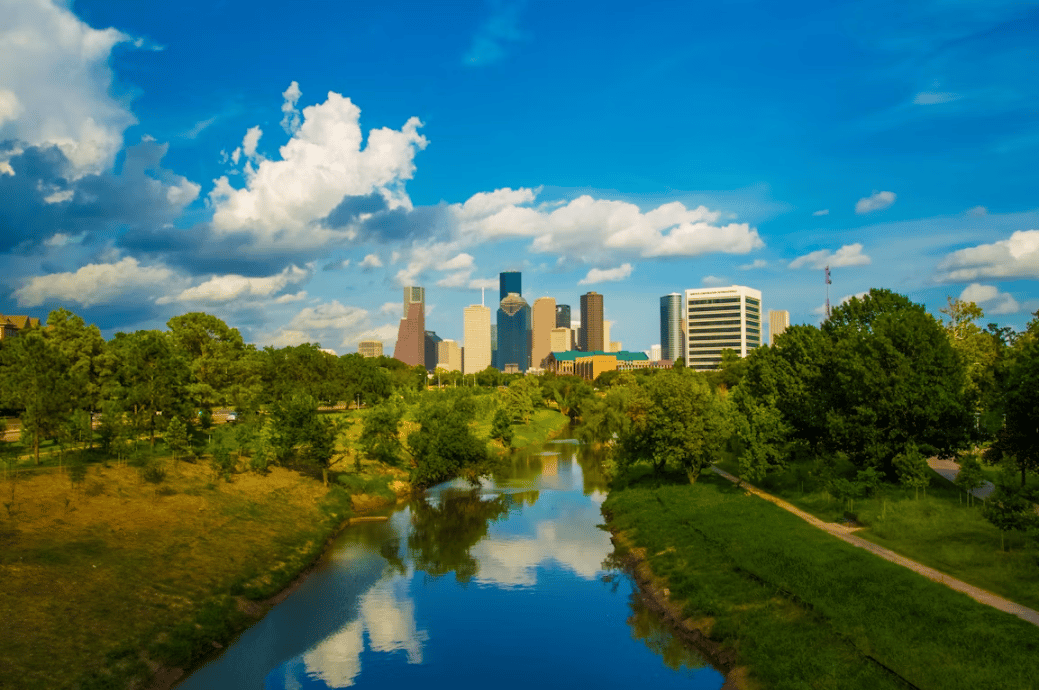
Houston city view / Photo credit to Alisa Matthews/Unsplash
For retirees managing chronic conditions or planning for future care needs, healthcare access can outweigh every other factor. This is where Pasadena, near Houston, pulls ahead.
Harris County, where Pasadena sits, has 281 primary care physicians per 1,000 seniors, nearly 50 times the statewide ratio of 5.9 per 1,000. That's largely thanks to proximity to the Texas Medical Center in Houston, one of the largest medical complexes in the world.
Houston itself, however, ranked as the worst major city in the 2026 study for retirees overall, weighed down by high crime rates and unaffordability. This is a good reminder that healthcare access and overall livability don't always move together; a suburb near a strong hospital system can offer the best of both.
What Are The Best Places to Retire in Texas for Lifestyle and Scenery?
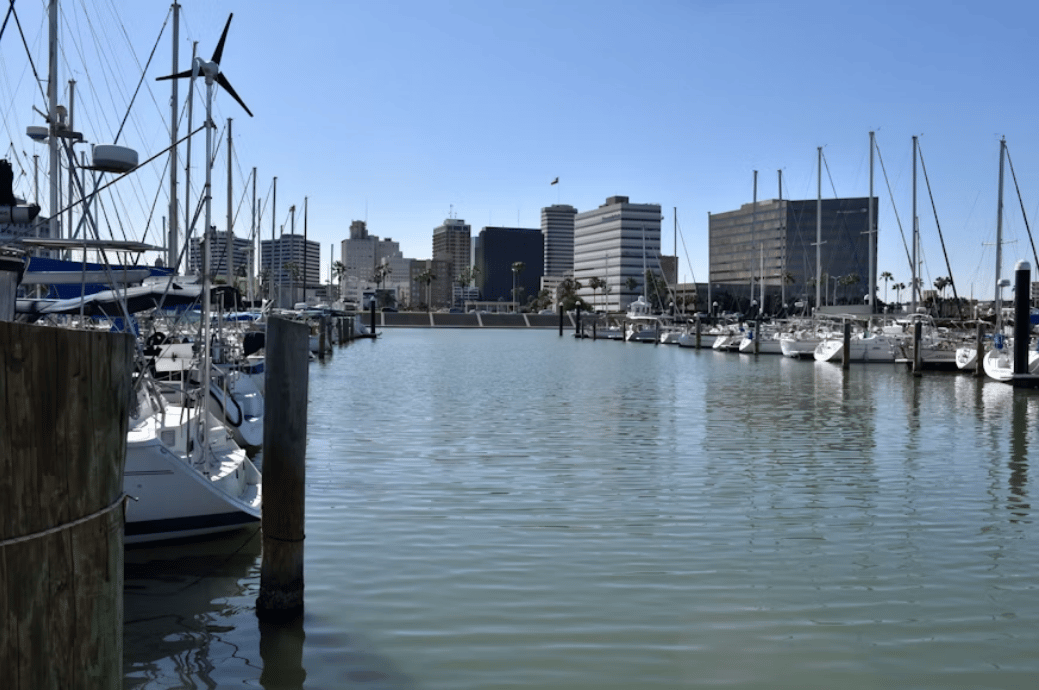
Downtown of Corpus Christi, Texas / Photo credit to Gower Brown/Unsplash
Not every retirement decision comes down to a spreadsheet. Plenty of people choosing among the best places to retire in Texas are looking for scenery, community character, and a slower pace of life.
Hill County Towns
The Texas Hill Country is one of the state's most popular retirement regions, and a few towns consistently come up.
Fredericksburg is the best known, with a German-heritage downtown, wineries, peach orchards, and a milder, drier climate than most of Texas. Median home prices have climbed to around $500,000 as the town has grown in popularity, and specialized healthcare requires a drive to Austin or San Antonio.
Kerrville offers similar scenery, Guadalupe River access, parks, and trails, at a lower price point, with median home prices closer to $360,000. Boerne, the closest Hill Country town to San Antonio, offers the easiest healthcare access in the region along with fast-growing local amenities.
Coastal Communities
If you'd rather wake up near the water, Corpus Christi and Rockport are the two most established options. Corpus Christi offers a relaxed Gulf Coast pace with median home prices near $270,000, well below most Florida or California coastal towns.
Rockport is smaller and often more affordable, with an artistic community feel and strong fishing and birdwatching. Both cities carry real hurricane risk, and insurance costs have risen accordingly, so it's worth checking current coverage availability before committing to a coastal move.
What Are The Best Places to Retire in Texas on a Budget?

Alamo Plaza, San Antonio, Texas / photo credit to weston m/Unsplash
For retirees with a smaller amount of money saved, several cities regularly appear as the most affordable places to retire in Texas.
El Paso has some of the lowest median home prices in the state, at about $250,000, and also enjoys high resident happiness scores because of its low cost. The city also provides access to the outdoor areas of the Franklin Mountains and has a distinct cultural identity because of its position on the border.
San Antonio remains the most affordable of the major metropolitan areas, with a cost of living about 8% lower than the national average and median house prices hovering around $300,000. Its excellent access to military and veteran healthcare, available via Joint Base San Antonio and the South Texas VA, makes it a natural choice for retired service members.
As a rough estimate, a $400,000 savings fund at age 65 will yield around $16,000 per year using the standard 4% rule. Together with Social Security, this income level is feasible in places such as El Paso or San Antonio, but becomes very tight in more expensive areas like Fredericksburg or The Woodlands.
What to Consider Before You Choose
Any list ranking the best places to retire in Texas should include realistic qualifications. Although these factors aren't featured in a ranking table, they affect daily life after you move.
Texas summer heat is intense. In the central and southern regions of the state, days reaching 90 degrees frequently last from May until September, and the heat index usually exceeds 105°F in inland areas. If you or one of your parents has a sensitivity to heat or mobility issues, take this situation seriously, not as a secondary matter.
Property taxes. Although Texas has no income tax, it makes up for it with higher property taxes, which average between 1.8 and 2 percent; therefore, incorporate this fixed expense into your monthly budget from the beginning rather than finding out about it after you have completed the purchase of a home.
Hurricane risk. Cities on the Gulf Coast, such as Corpus Christi and Rockport, have to deal with this kind of storm, and as a result, insurance costs have gone up. Towns in the inland areas and in the Hill Country completely avoid this risk, so it is something that should be considered if peace of mind is important to you as much as having a view of the ocean.
Healthcare access outside major metros. In areas outside major metropolitan regions, smaller towns in the Hill Country and rural communities usually require a trip to Austin or San Antonio to access specialist care, and Medicare Advantage networks may be less extensive in rural counties. If continuous medical care is a priority, it's wise to check the ratio of physicians to seniors in the area before moving to a smaller town.
Frequently Asked Questions
What is the most suitable place to retire in Texas as a whole? In the RetirementLiving.com study of 31 Texas cities carried out in 2026, Wichita Falls ranked number one, mainly because of its good value and the low proportion of senior households facing high cost burdens. On the other hand, the "best" city for you will depend on your own priorities, since Carrollton ranks highest in terms of safety. Pasadena leads in affordability. El Paso, Killeen, and Wichita Falls are usually regarded as the most affordable, with San Antonio being the most affordable of the major metropolitan areas, with costs approximately 8% lower than the national average. Major metro areas are about 8% below the national average.
What areas in Texas have retirees who live near water? Corpus Christi and Rockport are the two most established places along the Gulf Coast, while Kerrville and the area around Lake Travis near Austin provide access to inland water without hurricane exposure.
Would $400,000 be sufficient income for retirement in Texas? Applying the common 4% rule to a nest egg of $400,000 yields an annual amount of about $16,000. When added to the typical Social Security benefit, this situation is feasible in cheap cities such as El Paso or San Antonio. Still, it becomes tight in more expensive areas like Fredericksburg or The Woodlands.
What towns do snowbirds choose to retire in Texas? The Rio Grande Valley, with cities such as McAllen and Brownsville, is the most well-established winter destination for snowbirds since it has warm winters and low prices. At the same time, Corpus Christi and South Padre Island are popular alternatives.
Which Texas City is Right for You?
The right choice depends on whether you value affordability, safety, healthcare access, or lifestyle most. What’s consistent across all of them is that Texas offers real value: no state income tax, a below-average cost of living, and enough variety in landscape and community to fit almost any retirement vision. Take the time to visit in summer, run the numbers on property taxes, and talk through priorities with family before making the move.
Not sure yet what kind of senior living fits your loved one best? That's exactly what Senior Living Communities is here for, a place to discover licensed, verified communities across every care level, all in one spot. Not sure where to start? Use our Matching Tool and take our free 2-minute quiz to get matched with communities based on care needs, budget, and location. Ready to tour? Our Tour Companion will help you build a custom checklist of questions that matter most to your loved one, so nothing gets missed during a visit.