
What is Assisted Living in Florida: A Complete Guide
Wondering what is assisted living? This guide covers costs, licenses, services, and how to choose the right Florida community.

Ruby M. · Senior Living Writer
· 11 min read
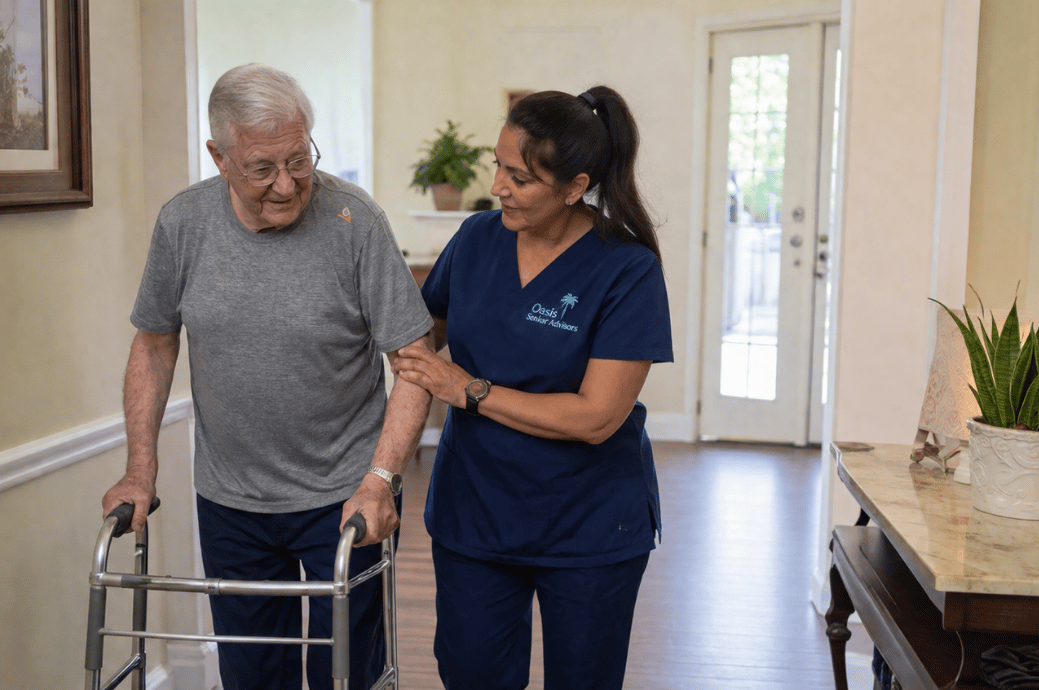
Table of Contents
- What Are Assisted Living Facilities?
- What Are The Types of Assisted Living Facility Licenses?
- Standard License
- Extended Congregate Care (ECC) License
- Limited Nursing Health (LNH) License
- What Are Alternatives to Assisted Living Facilities?
- Adult Day Care Centers
- Adult Family Care Homes
- Who Is Assisted Living Best For?
- What Are The Benefits of Assisted Living in Florida?
- What is The Average Cost of Assisted Living in Florida?
- Average Monthly Expenses
- Costs by Region
- Factors That Affect Pricing
- What Are the Amenities and Services Typically Offered in an Assisted Living Facility?
- How to Choose the Right Assisted Living Community?
- Florida Medicaid and Assisted Living
- Financial Resources in Florida
- Other Helpful Organizations and Agencies in Florida
- Questions to Ask a Facility During a Tour
- Frequently Asked Questions
- Find the Right Community With Confidence
If home has started to feel like too much: mom's been having trouble keeping up with the house, and dad forgot his medication too often, but a nursing home feels like too far, assisted living in Florida could be the answer.
Here's a place for older adults with help around for the day-to-day stuff: bathing, dressing, managing medication, meals, keeping the place clean.
If you are considering this for yourself, or trying to help a parent take the next step, this guide will help you understand how assisted living really works in Florida, what kind of care and services you can expect, what it really costs, and how to choose a community that feels right.
What Are Assisted Living Facilities?
Think of assisted living as a home, not a hospital. Residents get their own private apartment or a shared room, and there's real variety out there; some communities are small, cozy houses with just a few residents, while others are big campuses with hundreds of units and all the bells and whistles.
Most facilities provide a similar core set of services, including:
Housing, meals, and special diets
Personal care, such as help with bathing, dressing, and walking
Medication administration or reminders
Health monitoring and supervision
Help arranging medical appointments and transportation
Social activities and respite care
Basic mental health support
Residents can also bring in outside home health providers for additional nursing care, as long as they don't require round-the-clock nursing supervision.
What Are The Types of Assisted Living Facility Licenses?
In Florida, every community must hold a Standard license, and some add specialty licenses to serve residents with greater needs. Knowing the difference helps you match a loved one's care needs to the right type of community.
Standard License
A Standard license includes basic services most residents need, such as assistance with activities of daily living (ADLs), medication management, and daily supervision. This license is required for every assisted living facility in Florida to operate legally.
Extended Congregate Care (ECC) License
With an ECC license, you can age in place instead of moving when your needs change. This license allows facilities to offer limited nursing assessments, full assistance with bathing and grooming, vital-sign monitoring, special diets, supervision of dementia patients, and rehabilitative services.
Limited Nursing Health (LNH) License
Facilities with a Limited Nursing Services license can offer nursing care performed by licensed nurses, within the scope of their practice. Residents still need to meet the community's admission and continued-residency requirements, but this license allows for a higher level of hands-on medical support than a Standard license alone.
What Are Alternatives to Assisted Living Facilities?
Assisted living isn't the only option. Depending on a person's needs and budget, one of these alternatives might be a better fit.
Adult Day Care Centers
These centers offer daytime supervision and activities for older adults who still live at home, whether that's a private residence, an assisted living facility, or an adult family care home. Services typically include social activities, self-care training, meals, and respite care that gives family caregivers a break. Some centers also offer health assessments, therapy, and transportation.
Adult Family Care Homes
Adult family care homes offer full-time family-style living with up to five residents in a private home. The homeowner lives on-site with the residents and provides many of the same basic services as an assisted living facility: meals, personal care, medication assistance, supervision, and transportation arrangements. It's more personal, less than a traditional assisted living community.
Who Is Assisted Living Best For?
Assisted living is usually appropriate for adults 18 or older who can no longer live safely alone but need help with eating, bathing, grooming, or walking. It is also appropriate for persons who need help with medication management or routine, non-intensive nursing or mental health care.
People who need around-the-clock nursing care, require restraints, or depend on others for nearly all daily activities may need a higher level of care than assisted living can provide. In these cases, a nursing home is often the more appropriate option.
What Are The Benefits of Assisted Living in Florida?
Florida is one of the most senior-friendly states in the country, home to more than 5.2 million older adults. The state has no income tax, no estate or inheritance tax, and doesn't tax Social Security benefits, which makes it financially appealing for retirees choosing assisted living.
Florida's assisted living market is both expansive and well-established, in addition to tax benefits, with over 1,000 licensed communities across the state. There is a greater choice of location, price point, and specialty care, as well as a warm climate that supports year-round outdoor activities and social programming.
What is The Average Cost of Assisted Living in Florida?
Cost is usually one of the biggest factors when choosing a community, and Florida's pricing varies widely by region and level of care.
Average Monthly Expenses
The average cost of assisted living statewide in Florida is roughly $4,000 to $5,600 per month, which is usually lower than the national average. Independent living is usually less costly because it does not offer hands-on care, while memory care communities are more expensive because of the specialized supervision they provide.
Costs by Region
Prices in Florida vary greatly from city to city. High-demand metro areas like Fort Lauderdale are well above the state average, while cities like Tampa and Pensacola tend to be below it.
Region | City/Metro Area | 2026 Estimated Monthly Cost (3% Annual Inflation Rate) |
North Florida | Pensacola | $5,575 |
Tallahassee | $5,898 | |
North Central Florida | Gainesville | $8,758 |
Ocala | $5,447 | |
Northeast Florida | Jacksonville | $7,004 |
Central Florida | The Villages | $6,026 |
Orlando | $6,180 | |
Tampa | $5,150 | |
St. Petersburg | $5,778 | |
Southwest Florida | North Port / Sarasota / Manatee | $5,920 |
Lee County / Fort Myers | $6,392 | |
Naples | $6,482 | |
Southeast Florida | Palm Beach | $5,786 |
Miami | $5,786 |
Source: CareScout Cost of Care Data
Before you narrow your search, it's worth comparing a handful of nearby cities. Sometimes a short drive can mean a meaningful price difference.
Factors That Affect Pricing
Several things influence what a facility charges, including:
The size and location of the facility
Which specialty license it holds (Standard, ECC, or LNS)
The level of personal care and services needed
Room type, whether private or shared
Amenities like therapy programs, memory care, or transportation
Many communities charge a base rate for standard care; Florida adds fees for extra care, so it's worth asking for an itemized breakdown before signing anything.
What Are the Amenities and Services Typically Offered in an Assisted Living Facility?
Beyond the core care services, most assisted living communities offer amenities that support daily comfort and social connection. Common offerings include:
Full or shared kitchens and dining rooms
Fitness rooms, walking paths, and exercise classes
Social events, games, arts and crafts, and music programs
Transportation to medical appointments and outings
Pet-friendly policies at many communities
Specialty therapies like physical, occupational, speech, or water therapy
Memory care programming for residents with dementia
Not every community offers everything, so it's worth asking directly about what matters most to you or your loved one.
How to Choose the Right Assisted Living Community?
Choosing the right assisted living community typically begins with touring a few in person. Talk to staff and residents and pay attention to how comfortable the space feels, not just how it looks on paper.
Florida's Agency for Health Care Administration has a free online comparison tool where you can search by location, complaint history, bed size, languages spoken, and specialty programs such as memory care or physical therapy. It's a good place to start before you even step foot in a community.
Once you've toured a few places, compare notes side by side. Look closely at staffing levels, cleanliness, activity calendars, and how clearly staff answers your questions about care plans and costs.
Florida Medicaid and Assisted Living
Florida Medicaid does not directly pay for room and board in assisted living. However, it does help pay for some of the care costs through the Statewide Medicaid Managed Care Long-Term Care (SMMC LTC) program, sometimes referred to as the Long-Term Care Waiver. For qualifying residents, personal care services such as help with eating, grooming, and getting around are covered by the program.
To qualify, applicants generally must be 65 or older, a Florida resident, enrolled in Medicare Parts A and B, assessed as nursing-home eligible by the CARES program, and within certain income and asset limits. Because the waiver has limited enrollment, it's smart to apply for the waitlist as early as possible.
Seniors who receive Supplemental Security Income (SSI) may also be eligible for Florida's Optional State Supplementation (OSS), which provides additional financial assistance to help cover assisted living costs for those with limited income and resources.
Financial Resources in Florida
Paying for assisted living is usually a mix of private funds, insurance, and public assistance. Florida has several resources worth knowing about.
Resource | Contact Number | What They Help With |
MyFloridaCFO.com and FLOIR.com (FL Dept. of Financial Services) | (877) 693-5236 or (850) 413-3089 | Long-term care insurance questions, policy coverage, and consumer protection |
CARES (Comprehensive Assessment and Review for Long Term Care) | (800) 963-5337 / TDD (800) 955-8771 | Assesses care needs and eligibility for Medicaid long-term care waivers |
SHINE (Serving Health Insurance Needs of Elders) | (800) 963-5337 / TDD (800) 955-8771 | Free counseling on Medicare, Medicaid, long-term care insurance, and prescription assistance |
Florida Agency for Persons with Disabilities | (866) 273-2273 or (850) 488-4257 | Supportive living and Medicaid waivers for adults with developmental disabilities |
Florida Department of Veterans' Affairs | (844) 693-5838 | Veterans' benefits counseling; also operates its own ALFs and nursing homes |
Department of Elder Affairs (DOEA) | (800) 963-5337 / TDD (800) 955-8771 | Medicaid waiver info, elder abuse prevention, caregiver support, and relocation guidance |
Other Helpful Organizations and Agencies in Florida
Beyond the core financial resources above, these agencies can be worth a call, whether you're troubleshooting a specific issue or just looking for guidance.
Organization | Contact Number | What They Help With |
Department of Children and Families (DCF) | (866) 762-2237 | Medicaid, Medicaid waiver, and OSS applications |
Statewide Medicaid Managed Care Long-Term Care Program (SMMC LTC) | (850) 414-2000 | Coordinates Medicaid-funded care in assisted living, at home, or in the community |
PACE (Program of All-Inclusive Care for the Elderly) | (855) 435-7223 | Comprehensive Medicaid coverage for especially frail seniors as an alternative to nursing home care |
Florida Long-Term Care Ombudsman Program | (888) 831-0404 or (850) 414-2323 | Advocates for ALF and nursing home residents; helps resolve complaints |
Florida Senior Legal Helpline / Elder Law Program | (888) 895-7873 | Free legal guidance on long-term care, estate planning, and guardianship |
Florida Abuse Hotline | (800) 962-2873 / TDD (800) 453-5145 | Reporting suspected elder abuse, neglect, or exploitation |
AHCA Consumer Complaint Line | (888) 419-3456 | Filing a complaint against a licensed facility |
Florida Area Agencies on Aging | Varies by region | Local guidance on financial aid, in-home care, and long-term care planning |
Alzheimer's Association, Florida Chapters | (800) 272-3900 | Support groups, case management, and resources for dementia caregivers |
Florida Association of Senior Centers | (850) 891-4008 | Directory of senior centers and community-based services |
Medicare Hotline | 1-800-MEDICARE (1-800-633-4227) | General Medicare questions and enrollment help |
Disability Rights Florida | (800) 342-0823 | Protection and advocacy services for people with disabilities |
Questions to Ask a Facility During a Tour
A tour is your chance to get real answers before committing. Consider asking:
What is included in the base monthly rate, and what costs extra?
Can I see a copy of the residency contract in advance?
What's the staff-to-resident ratio, and is a nurse on-site?
How much notice is given before a rate increase?
Is there a bed hold policy if I'm hospitalized temporarily?
What activities and outings are offered, and is transportation included?
Are special diets accommodated?
What dementia-specific training and safety measures are in place?
Can I bring my pet?
Will I have a private room and bathroom, or will I share?
Frequently Asked Questions
How to verify if an assisted living facility is licensed in Florida? Ask to see the facility's current license from the Agency for Health Care Administration. It should list an effective and expiration date, along with any specialty licenses. You can also verify licensure using the Florida What's On Online Facility Locator tool.
Do all ALFs cost the same? No. Each facility sets its own rates based on size, amenities, location, and the level of care provided. Many communities also charge separate fees for base services and additional care.
How can I pay for my ALF residency? Most residents pay privately, though some communities accept long-term care insurance, veterans' benefits, or Medicaid waiver funding for care services. Ask each facility directly which payment types they accept.
Are the facility's risks needed to reside in an ALF? Yes. You'll sign a residency contract outlining services, charges, and policies, such as rate increases and bed holds. Ask for a copy in advance so you can review Florida's carefully, ideally with a family member.
Are nursing services provided in ALFs? It depends on the facility's license. Communities with an Extended Congregate Care or Limited Nursing Services license can provide some nursing care, but assisted living isn't designed for residents who need 24-hour nursing.
Do assisted living facilities offer memory care for people with veterans' or dementia? Many communities, particularly those with an ECC license, offer dementia-specific programming and trained staff. Ask about staff training, safety measures, wandering, and daily activities designed for memory care residents before signing a contract.
Find the Right Community With Confidence
Costs vary a lot depending on care level, location, and what's actually included, so the only real way to know is to ask. Senior Living Communities connects you with licensed, verified communities and helps you compare pricing side by side. Not sure where to start? Use our Matching Tool and take our free 2-minute quiz to get matched with communities based on care needs, budget, and location. Ready to tour? Our Tour Companion will help you build a custom checklist of questions that matter most to your loved one, so nothing gets missed during a visit.
You may also download the complete guide on How To Choose an Assisted Living Community in Florida to learn what to look for, compare your options, understand costs, and make a confident decision for yourself or your loved one.
Free guide
How to Choose an Assisted Living Community in Florida
What to look for, what questions to ask, and what Florida's different license types mean for the level of care your loved one receives.
Download the free guideWhether you're planning for yourself or helping a loved one, finding the right assisted living community starts with understanding your options.